Walk Through the Article
The Logic Behind Why The Row Bags Have No Logo: The Design Language Explained
Lift a bag from The Row and the first thing you register is something missing. There is no monogram print, no plaque bolted to the front panel, no oversized initial swinging from a handle. The label, established in 2006 by Mary-Kate and Ashley Olsen and named after Savile Row in London, takes that reference not as decorative packaging but as a construction brief. A Savile Row jacket is known by cut, cloth and hand finishing rather than by a badge, and that same rule extends to the leather goods. That choice shapes everything downstream, from silhouette and hardware finish to lining and the way the bags sit on the observed 2026 market. Take what follows as a design-led row bags overview rather than a shopping list, because it sets out the specific choices that carry identity once the logo is stripped away.
The Absence Is the Argument
Taking the logo away is anything but neutral, because a logo carries out real work in the background for a handbag. It announces the price bracket at ten paces, flatters the owner by broadcasting the purchase, and lets a factory conceal mediocre construction behind a famous symbol. Remove the logo and all of those jobs get handed to the object itself. Now the shape has to carry at a distance, the leather has to look expensive to a stranger who cannot name the brand, and the seams have to stand up under close inspection. That is why the row bags are so often cast as difficult to photograph and easy to recognise in person. The design language is a series of replacements, and each substitution costs money that a printed monogram would have spared.
What Does the Monogram’s Job
Silhouette, proportion and construction are the three things that carry identification on a row bag. Silhouette is the outline you the row terrasse bag read before any detail resolves, and it is doing the work a logo ordinarily does. Proportion is the outline’s internal rhythm, the relationship between width, depth and handle drop that makes one crescent shape look considered and another look generic. Construction backs up the first two once the bag is in your hands, by way of stitch density, edge finishing and the way panels meet. Not one of these can be added late or applied like a sticker at the end. Because they are decided at the pattern stage, the approach is costly to copy and difficult to fake.
The Silhouette Is the Name
The catalogue is organised by shape names rather than seasonal collections, and buyers treat those names the way they would use a monogram. Margaux, Park, Half Moon and the 90’s Bag carry the line, each its own geometric idea rather than a variation on one theme. The Half Moon is a shallow crescent, listed officially at 8 x 13.5 x 2.5 inches; published dimensions differ between sources, so take the figure as an official reference point rather than a final number. The Soft Margaux 10 comes in at 10 x 7 x 7.5 inches with a five-inch handle drop, which gives it a squared, upright stance no soft hobo can imitate. Measuring 14.75 x 9 x 5 inches, with elongated tubular handles and narrowed gusseted side panels, the Margaux Shoulder 12 is another creature entirely despite the shared family name. Learn to read these outlines and the row bag in front of you identifies itself without a word of branding.
Start with a few silhouette cues, because they recur across the line:
- Belted side gussets and protective metal feet on the Soft Margaux family
- Elongated tubular handles and signature adjustable buckles on the Margaux Shoulder 12
- A tall, narrow upright body on the N/S Park Tote, versus the wider standard Park Tote
- A hinged frame closure and hidden adjustable strap on the Bourse Clutch
- A shallow crescent on the Half Moon, cut far flatter than the conventional hobo
The Number Is the Measurement
The second stand-in for branding is arithmetic, and here it is strikingly literal. That number beside a model name is the bag’s width in inches; it is not a collection code, and not a marketing tier. Margaux 10, 12, 15 and 17 step up in exact inches, as do India 10.00, 12.00 and 15.75, Agnes 12 and 15, Sofia 8.75 and 10, and Marlo 12 and 14. The convention gives buyers a shared vocabulary that needs no images, which matters for products that photograph almost identically across sizes. The naming describes the object rather than dressing it up, which reinforces the whole point of the design language. A system that gives you dimensions instead of a story is inviting judgement on the object itself.
Two Stamps, Deliberately Small
Nothing here is literally unmarked. The marking is just designed to be discovered rather than noticed. There is a small exterior stamp positioned low on the side of the bag, sized and placed so it blends into the leather instead of advertising itself. Inside, a second stamp sits crisply centred, reading the logo and the words Made in Italy. You can find that interior mark on the brand’s own product pages for the Half Moon, the Soft Margaux 10 and 12, the Margaux Shoulder 12, the Bourse Clutch, the Terrasse To-Go and the Large Slouchy Banana. That placement logic sits neatly with the rest of the row fashion vocabulary, since the information is legible to anyone paying attention and invisible to everybody else. It is branding as a footnote rather than a headline, and it is the closest the bags come to signing their own work.
The Luxury Is Turned Inward
Hardware is where most labels compensate for restraint elsewhere, typically with polished gold that catches light across a room. The Row takes the opposite route: palladium-plated fittings in a matte or brushed finish that will not shine, by design. What you get is metal that reads as weight and precision rather than as jewellery, ageing without the scratch map that mirror-polished plating collects. Linings follow the same rule, treated as materials in their own right rather than as surfaces for repeated logo jacquard. Doing that job are nappa, lambskin, calfskin and cotton herringbone, including the cotton herringbone lining in the Soft Margaux 10 and the full lambskin lining in the Margaux Shoulder 12. Look at the label’s shoes and the same restraint appears, with a plain last and an unadorned toe carrying the identity, which is the clearest evidence that the no-logo position is a house philosophy and not a bag-department decision.
What the Quiet Costs You
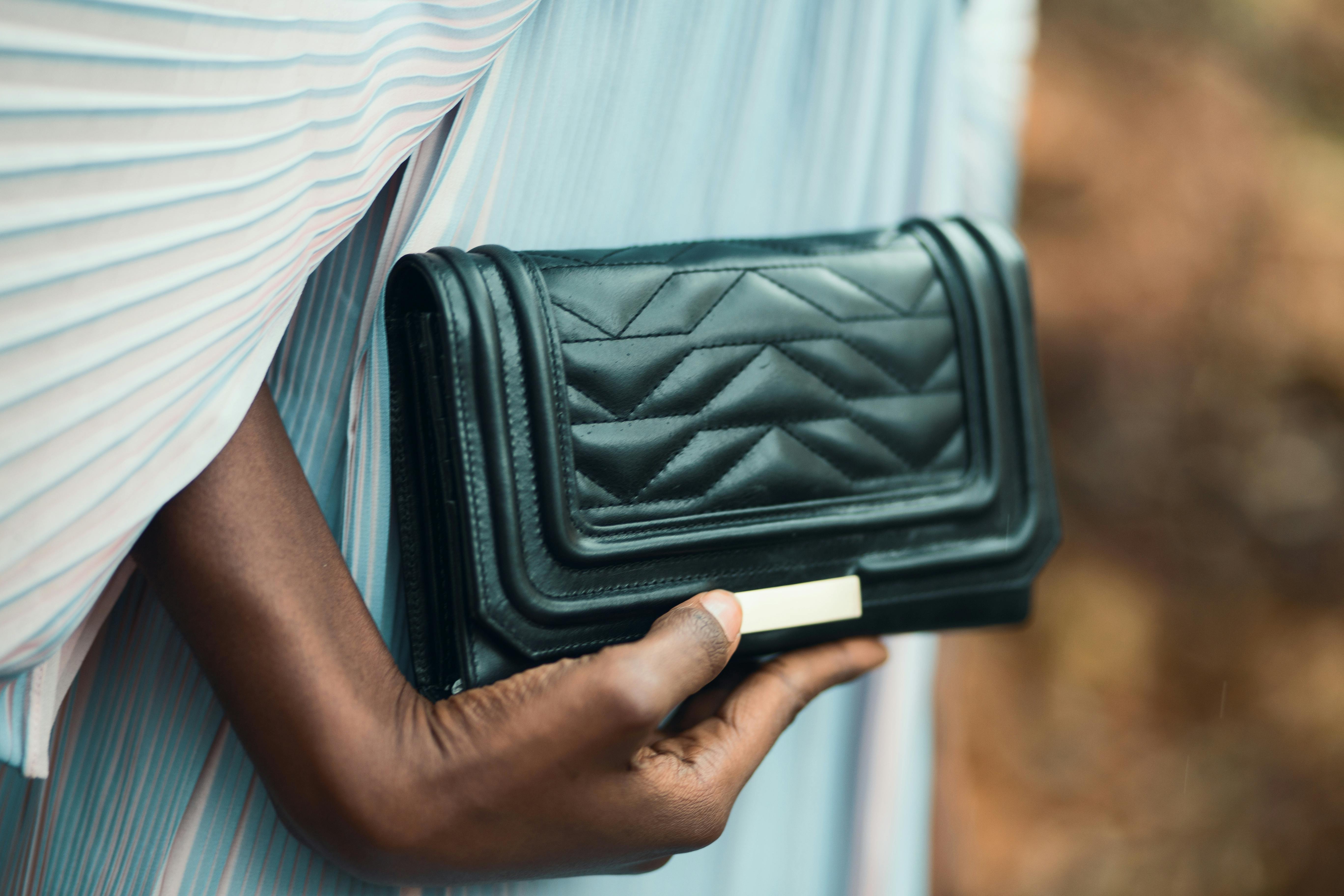
None of it comes free, and the observed 2026 market prices reveal where the money goes. A buyer is paying for pattern work, hide selection, hand-finished edges and hardware that has no decorative function, none of which produces a recognisable badge. Selling that proposition is difficult, and it explains why the range runs unusually wide rather than clustering around a single hero price. The table below places anchor models against the detail that identifies them in place of a logo, using observed 2026 market prices rather than an official price list, which the brand does not publish. The right-hand column is the actual branding here, so read it that way. Stock, region and retailer all move the figures, so take them as a snapshot rather than a fixed tariff.
| Model | Observed 2026 market price | What identifies it in place of a logo |
|---|---|---|
| 90’s Bag | $1,090 | Soft slouched shoulder body and very little seaming |
| Half Moon | $1,390 | A shallow crescent cut, listed officially at 8 x 13.5 x 2.5 in |
| Bourse Clutch | $1,590 | Hinged frame closure with nappa lining and a hidden strap |
| N/S Park Tote Small | $1,550-1,620 | A tall, narrow upright body with an unstructured stance |
| Soft Margaux 10 | $3,650 | Belted side gussets, protective metal feet, herringbone lining |
| Margaux Shoulder 12 | $4,900 | Elongated tubular handles, adjustable buckles, lambskin lining |
How to Read the Design Language in Practice
For anyone learning row handbags at this level, the useful skill is not memorising names but learning to look in the right order. Start with the outline, check proportion against the inch number in the model name, and then move on to the seams and the edges. Next is hardware, assessed on weight and finish instead of shine; the lining comes last because its job is to confirm rather than to introduce. The sequence also protects you when a row bag is offered secondhand, because counterfeits reproduce shapes far more easily than they reproduce edge finishing and matte plating. The same habits are worth carrying into any listing of the row for sale, where photographs flatten exactly the qualities that matter most. Once you have learned the grammar, the whole catalogue becomes legible, which is precisely what a design language without a logo asks of you.