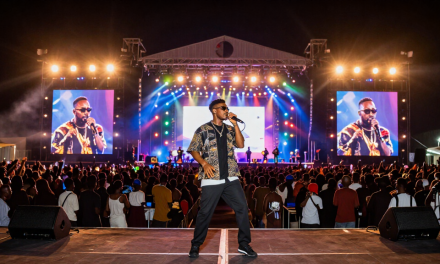
In 2019, Burna Boy released an album called African Giant. It was the moment he stopped asking for permission to be taken seriously on the global stage and simply declared it. By 2021, he had a Grammy. By 2026, he had performed at the FIFA World Cup Final halftime show alongside Shakira — the most-watched musical performance on the planet. Damini Ebunoluwa Ogulu’s journey from Port Harcourt to that stage is the story of how one of Africa’s most commercially dominant artists built a fortune estimated at $28 million by refusing to compromise his sound for any market.
Walk Through the Article
Quick Facts
| Full Name | Damini Ebunoluwa Ogulu |
|---|---|
| Date of Birth | July 2, 1991 |
| Age | 35 years old |
| Birthplace | Port Harcourt, Rivers State, Nigeria |
| Nationality | Nigerian |
| Profession | Singer, Songwriter, Music Producer |
| Net Worth (2026) | $28 Million |
| Known For | “Last Last”, “Ye”, Grammy winner, African Giant, 2026 FIFA World Cup halftime show |
| Manager | Bose Ogulu (his mother) |
Early Life & Education
Damini Ebunoluwa Ogulu was born on July 2, 1991, in Port Harcourt, the capital of Rivers State in the Niger Delta region of Nigeria. Port Harcourt is the country’s oil capital — a commercially significant and culturally rich city whose musical output has long been distinct from the Lagos-centric mainstream of Nigerian pop. Growing up in Port Harcourt gave Burna Boy a perspective on Nigerian identity that would inform his later commitment to representing an African voice that existed outside the industry’s established power centres.
His family background placed him closer to the music industry than most Nigerian artists of his generation. His grandfather, Benson Idonije, was the personal manager of Fela Kuti — the legendary Afrobeat pioneer whose political music and pan-African identity would become the most obvious reference point for Burna Boy’s own artistic positioning. Growing up with that history in the family created a framework for understanding music as both cultural expression and political statement, not merely commercial product. His mother, Bose Ogulu, became his manager — a family arrangement that gave him an unusual degree of control over his career decisions from an early stage.
He attended Corona Secondary School in Agbara, Lagos, before moving to London for further education at the British International School and later Anglia Ruskin University in Cambridge. His time in the UK was musically formative, exposing him to a broader range of influences — UK grime, dancehall, and electronic music — that he would later layer into Afrobeats production in ways that distinguished his sound from his Nigerian contemporaries.
Career Timeline
2010–2012: Early Releases and the Lagos Scene
Burna Boy began recording music seriously in his early twenties, operating out of Lagos and building a network of producer relationships. His early work was rooted in dancehall and R&B influences, but already showed the genre-blending instinct that would define his mature sound. He signed to Aristokrat Records in 2011 and released material that circulated within Nigerian music circles without achieving mainstream breakthrough. The learning years were productive rather than celebrated — he was absorbing the mechanics of the Lagos music industry and developing a sound that would eventually be too distinctive to ignore.
2012–2017: Breakthrough and L.I.F.E.
The release of “Like to Party” in 2012 was the moment Burna Boy’s commercial profile shifted significantly. The song was a radio and club staple across Nigeria, introducing his voice and energy to a mainstream audience that hadn’t been paying attention to his earlier releases. His debut studio album L.I.F.E. (Leaving an Impact For Eternity) followed in 2013, a project that established him as a serious artist with a distinctive sound rather than a one-hit hitmaker. The album featured production that blended Afrobeats, dancehall, and contemporary R&B in proportions that hadn’t been heard from a Lagos-based artist before.
The period from 2014 to 2017 involved label transitions and personal challenges, but his creative output continued. He left Aristokrat Records, eventually signing with Atlantic Records UK — a deal that gave him international distribution infrastructure while retaining the creative independence that had always been central to his identity. His albums On a Spaceship (2015) and Outside (2018) developed his sound further and built his international touring base, particularly in the UK and Europe, where Nigerian diaspora communities and broader Afrobeats audiences were expanding rapidly.
2018–2021: African Giant, Twice as Tall, and the Grammy
African Giant, released in 2019, was the artistic and commercial statement that reframed everything. Named after the track “African Giant” — which had itself emerged from a controversy in which Burna Boy was not given top billing at a music festival despite his commercial status — the album was explicitly and unapologetically a declaration of identity. It debuted at #1 in Nigeria and performed strongly internationally, earning Burna Boy his first Grammy nomination for Best World Music Album.
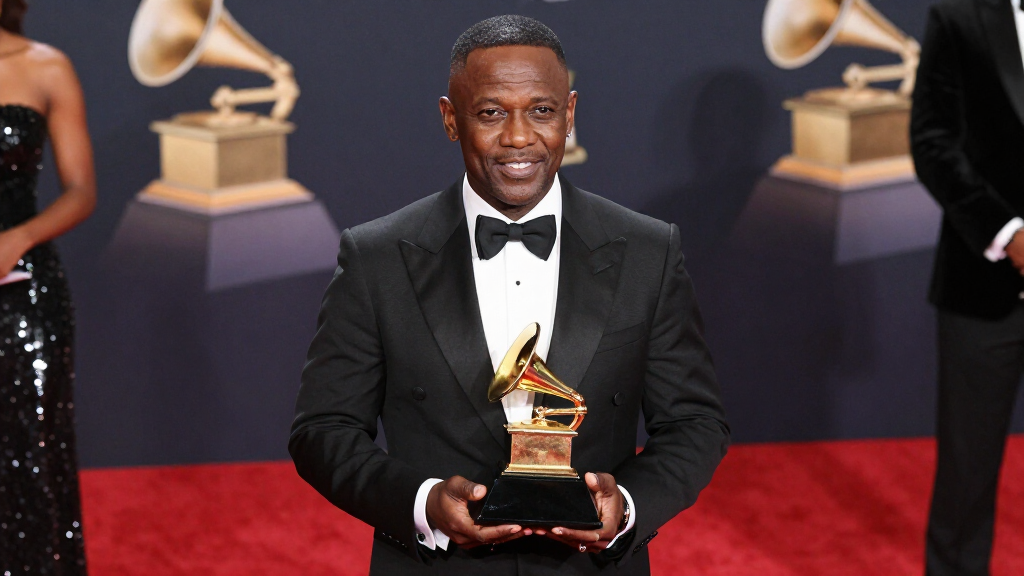
Twice as Tall, released in August 2020, won the Grammy Award for Best Global Music Album at the 63rd Grammy Awards in March 2021, making Burna Boy the first Nigerian solo artist to win a Grammy at the main ceremony. The album was produced by his mother Bose Ogulu and co-executive produced by Diddy, and featured collaborations with Coldplay’s Chris Martin, Stormzy, and others. The Grammy win was not just commercially significant — it was a cultural moment for Nigerian music, validating the global ambitions that Burna Boy had been articulating since African Giant.
2022–2026: Love, Damini, Last Last, and the World Stage
His 2022 album Love, Damini contained “Last Last” — a song built around a sample from Toni Braxton’s “He Wasn’t Man Enough” that became one of the most commercially successful Afrobeats tracks of the year and one of the defining songs of his career. Its emotional directness and melodic accessibility made it a crossover success that performed strongly on global streaming platforms and introduced his music to audiences who hadn’t previously engaged with Afrobeats as a genre.
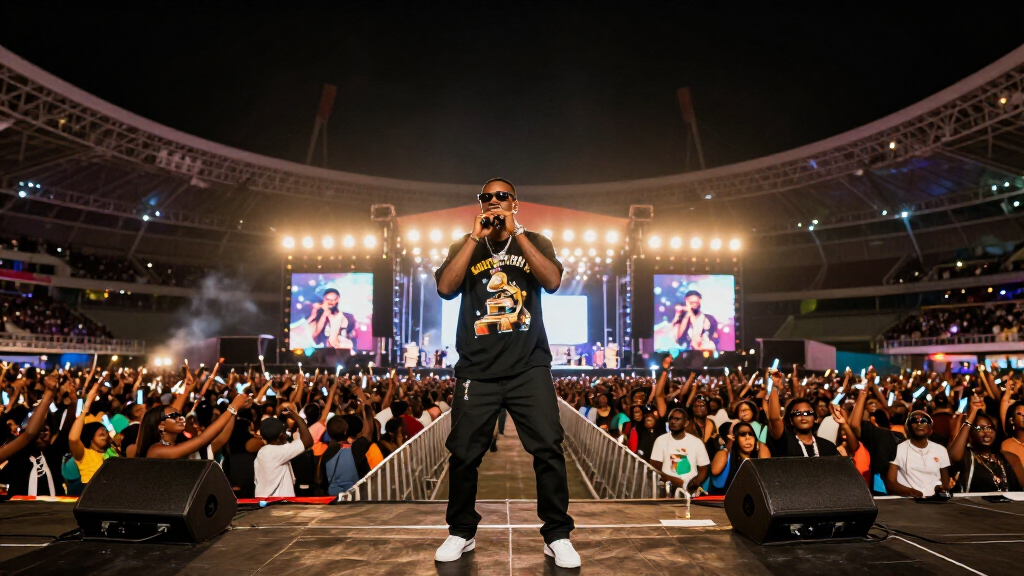
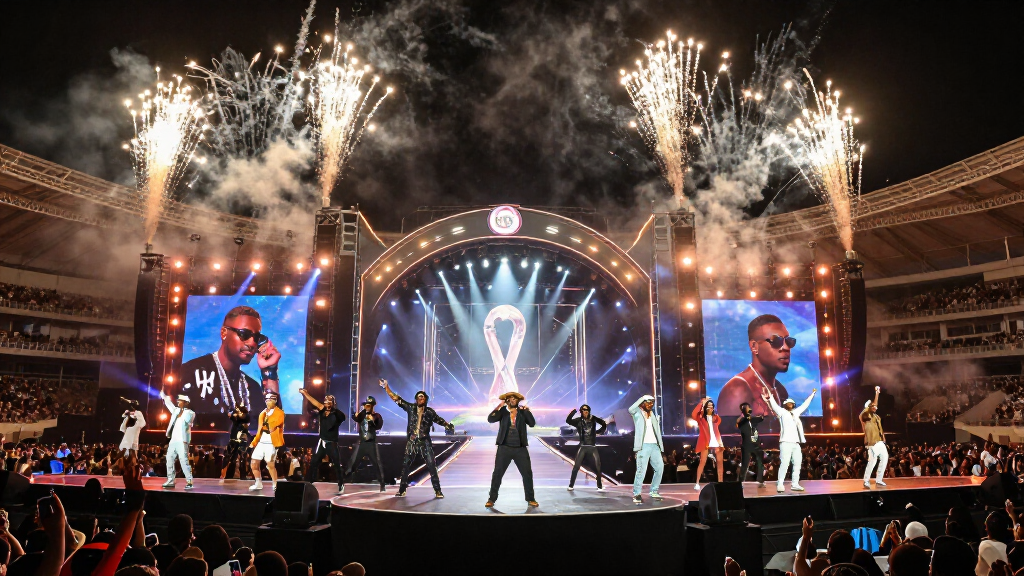
The arc from “Last Last” to the 2026 FIFA World Cup Final halftime show — performed alongside Shakira to the largest audience in television history — represents the most dramatic escalation in his career’s commercial profile. The performance was a recognition by FIFA, one of the world’s most commercially cautious organisations, that Burna Boy’s global standing was sufficient to command the planet’s largest musical stage.
Net Worth & Income Sources
Burna Boy’s estimated $28 million net worth in 2026 reflects the compounding effect of multiple income streams operating simultaneously at scale: touring, streaming, publishing, endorsements, and the significant valuation premium that Grammy recognition and World Cup visibility add to an artist’s commercial appeal.
| Income Source | Estimated Amount | Type | Notes |
|---|---|---|---|
| Live Touring & Performances | $5–8M/year | Annual (personal) | Headline stadium and arena tours across Africa, Europe, North America; top-tier festival fees post-Grammy |
| Music Streaming & Royalties | $2–4M/year | Annual (personal) | Catalogue across seven studio albums; “Last Last” and “Ye” among most-streamed Afrobeats tracks globally |
| Brand Endorsements | $1–2M/year | Annual (personal) | Partnerships with global brands accelerated post-Grammy and post-World Cup appearance |
| Publishing & Songwriting | $500K–1M/year | Annual (personal) | Publishing share of extensive catalogue; co-writing credits on high-stream releases |
| Merchandise & Other | $300–500K/year | Annual (personal) | Branded merchandise; appearance and DJ fees; licensing |
| Estimated Total Net Worth | $28 Million (2026) | ||
Net Worth Over Time
Burna Boy’s financial growth has tracked his critical profile with unusual precision — a reflection of an artist whose commercial success has always been tied to artistic credibility rather than manufactured hit-chasing. Before 2019 and African Giant, his net worth was built on touring within African and diaspora markets and the streaming revenue of a critically respected but not yet globally dominant catalogue. The Grammy win in 2021 was the inflection point: it made him bookable at fee levels that global promoters had previously reserved for artists with English-language chart success, opening markets in North America and Europe at a scale that transformed his annual earnings. “Last Last” in 2022 added streaming revenue at a new level, and the 2026 World Cup halftime appearance is expected to accelerate his commercial profile further into 2026 and beyond.
Personal Life & Relationships
Burna Boy has been in a high-profile relationship with Daniella Osbourne, known professionally as Stefflon Don — a UK-based rapper of Jamaican heritage whose career has intersected with both UK grime and dancehall. The relationship has been publicly documented across both artists’ social media and in music media. He has spoken in interviews about his Igbo heritage and the influence of his family — particularly his grandfather Benson Idonije’s relationship with Fela Kuti — on his artistic identity. His mother Bose Ogulu remains his manager, an arrangement that has been credited with giving him unusual creative and commercial autonomy relative to most artists signed to major international labels.
Awards & Recognition
Beyond the Grammy Award for Best Global Music Album for Twice as Tall (2021), Burna Boy has accumulated BET Awards, MTV Africa Music Awards, Headies Awards, and African Music Entertainment Awards across his career. He has received recognition from international media including Time magazine, which has included him in lists of the world’s most influential artists. His consistent commercial success across African, European, and North American markets — demonstrated by arena and stadium tour sell-outs — represents a form of recognition that transcends awards: the ability to fill rooms at the highest level on multiple continents simultaneously.
Little-Known Facts About Burna Boy
- His grandfather Benson Idonije was the personal manager of Fela Kuti — the legendary Nigerian Afrobeat pioneer — giving Burna Boy a direct family connection to the artist most frequently cited as his primary influence.
- His mother Bose Ogulu has managed his career since its early stages, an unusually personal arrangement that Burna Boy credits with preserving his creative vision in negotiations with international labels that might otherwise have pushed for commercial compromise.
- He was nominated for the Grammy Award for Best World Music Album for African Giant in 2020 before winning the following year for Twice as Tall — making his Grammy journey a two-year arc that reflected the growing international attention on his work.
- “Last Last” samples Toni Braxton’s “He Wasn’t Man Enough” — a clearance that required negotiation with the American R&B legend and gave the song a sonic connection between two of the most emotionally direct singers of their respective eras.
- His 2026 FIFA World Cup Final halftime performance with Shakira was seen by an estimated global television audience of over one billion viewers — making it the most-watched musical performance in his career and one of the most-watched in the history of live music.
https://www.youtube.com/watch?v=2bQ8Xd6xVwA
Frequently Asked Questions
What is Burna Boy’s net worth in 2026?
Burna Boy’s net worth is estimated at approximately $28 million as of 2026. His wealth comes primarily from touring — he commands some of the highest performance fees in Afrobeats — combined with streaming royalties from a catalogue of seven studio albums, brand endorsements, and publishing income. His Grammy win in 2021 and his 2026 FIFA World Cup Final halftime performance have significantly elevated his commercial profile in markets outside Africa.
What is Burna Boy’s real name?
Burna Boy’s real name is Damini Ebunoluwa Ogulu. He was born on July 2, 1991, in Port Harcourt, Rivers State, Nigeria. He adopted the stage name Burna Boy early in his career when he began releasing music professionally in the Lagos music scene around 2010.
Has Burna Boy won a Grammy?
Yes — Burna Boy won the Grammy Award for Best Global Music Album for his album Twice as Tall at the 63rd Grammy Awards in March 2021. He was previously nominated for the same category for African Giant in 2020. His Grammy win made him one of the first Nigerian artists to win at the main Grammy ceremony and was a watershed moment for Afrobeats’ international recognition.
What is Burna Boy’s most famous song?
Burna Boy has several songs that have achieved broad commercial recognition, but “Last Last” (2022) and “Ye” (2018) are among his most globally streamed tracks. “Last Last” — which samples Toni Braxton — became one of the defining Afrobeats songs of 2022 and performs consistently on global streaming charts. “Ye” remains one of his most-played tracks and is a standard part of his live set that consistently generates the largest audience reactions.
Where is Burna Boy from?
Burna Boy was born and raised in Port Harcourt, the capital of Rivers State in southern Nigeria’s Niger Delta region. Unlike many of his Nigerian music industry contemporaries, who are Lagos-based, his Port Harcourt roots have informed both his identity as an artist and his self-positioning as a voice distinct from the Lagos mainstream — a tension he has embraced rather than resolved.