
In 2012, a 16-year-old from Chicago’s Woodlawn neighborhood filmed a low-budget music video in his grandmother’s backyard while on house arrest. That video — for a song called “I Don’t Like” — racked up millions of YouTube views in days, caught the attention of Kanye West, and triggered a bidding war that ended with a $6 million deal with Interscope Records. More significantly, it changed the sound of American rap for the next decade. As of 2026, Chief Keef’s estimated net worth sits at approximately $12 million — built not through major-label royalties but through a relentlessly independent approach to music and business that has outlasted every cultural trend he helped create.

Walk Through the Article
Quick Facts
| Full Name | Keith Farrelle Cozart |
|---|---|
| Stage Name | Chief Keef |
| Date of Birth | August 15, 1995 |
| Age | 30 years old |
| Birthplace | Chicago, Illinois (Woodlawn neighborhood) |
| Height | 6’2″ (188 cm) |
| Nationality | American |
| Profession | Rapper, Producer |
| Net Worth | ~$12 Million (2026, estimated) |
| Label | Glo Gang (Glory Boyz Entertainment) — independent |
| Known For | “I Don’t Like,” “Love Sosa,” “Faneto,” pioneering Chicago drill |
| Key Collaborators | Kanye West, Rick Ross, A$AP Rocky, Lil Reese |
Early Life and Background
Keith Farrelle Cozart was born on August 15, 1995, in Chicago, Illinois, and raised in the Woodlawn neighborhood on the city’s South Side. Woodlawn sits adjacent to some of Chicago’s most historically impoverished and violence-affected communities, and Keef’s childhood was shaped by the realities of that environment. His mother was a teenager when he was born, and he was largely raised by his grandmother, Lolita Baldwin, in her home — the same home where he would eventually film the video that changed his life.
Chicago in the early 2010s was experiencing a specific musical ferment. A generation of young artists, many from the South and West Sides, were developing a sound rooted in trap music but filtered through the city’s gang culture and a distinctly cold, menacing aesthetic. Producers like Young Chop were crafting beats with booming 808s, hollow hi-hats, and a mechanical heaviness that felt unlike anything coming from Atlanta or New York. Chief Keef was not the only artist in this scene — Lil Durk, G Herbo, Lil Reese, and others were developing alongside him — but he would become its most visible face.
By his early teens, Keef was already making music and developing a following on the Chicago streets and through early social media. His delivery — flat, emotionless, almost bored — was the opposite of conventional rap charisma, and it turned out to be exactly what a generation was looking for.
Career Timeline
2012: “I Don’t Like,” Kanye West, and the $6 Million Deal
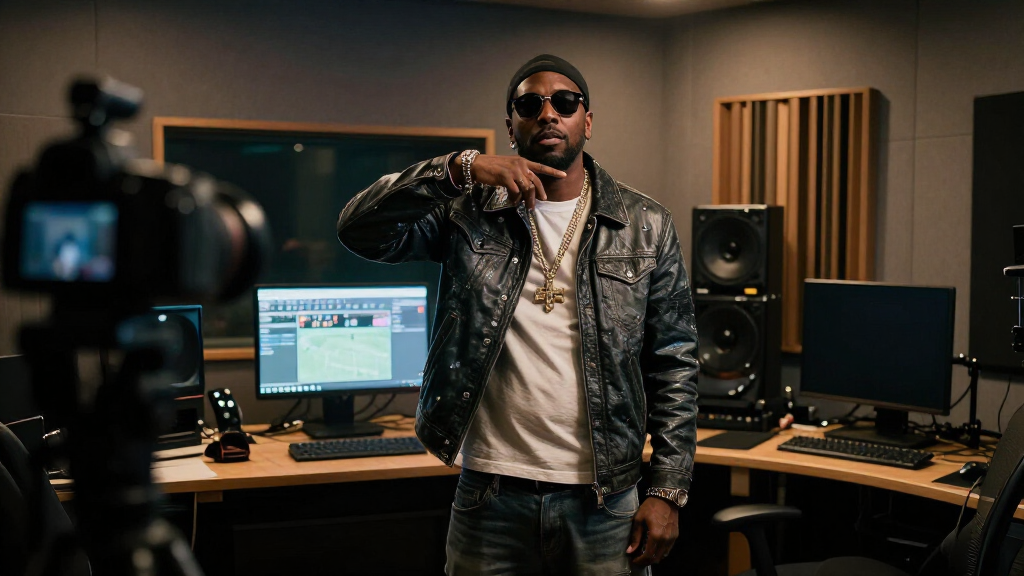
Chief Keef’s viral breakthrough came with “I Don’t Like,” a track he released on YouTube in early 2012 while under house arrest for a weapons charge. The video was filmed in his grandmother’s backyard on a minimal budget, but the song’s production — handled by Young Chop — was immediately arresting. The track spread organically through Chicago, then nationally, then internationally, racking up millions of views at a speed that was unusual for a complete unknown with no label infrastructure behind him.
Kanye West heard the record and recorded a remix that he released publicly, effectively cosigning a teenager from the South Side as one of rap’s most interesting new voices. The Kanye remix transformed Chief Keef’s trajectory overnight. Major labels moved aggressively, and by mid-2012 Keef had signed with Interscope Records in a deal reported to be worth approximately $6 million — a staggering figure for an unsigned 16-year-old.
His debut mixtape Back from the Dead and the subsequent major-label debut album Finally Rich (2012) arrived in the same period, with “Love Sosa” becoming his second breakout single. The combination of his independent momentum and major-label distribution pushed him to genuine chart success: Finally Rich debuted at number 29 on the Billboard 200.
2013–2015: Legal Issues, Label Friction, and Staying Prolific
The years following his breakthrough were complicated. Chief Keef’s relationship with Interscope deteriorated — the label reportedly struggled to market an artist whose entire aesthetic was built on an alienating blankness and whose legal troubles (parole violations, weapons charges, a period of relocation) made conventional promotional activities difficult. Interscope dropped him by 2014.
What distinguished Keef from artists who might have collapsed under those pressures was his output. While the major-label machinery was stalling, he was releasing music at a pace that other artists rarely match. Mixtapes, loosies, collaborative projects, and experimental records poured out of him — some polished, many deliberately rough, all with a consistent identity. He was building something that didn’t depend on a label’s quarterly planning cycle.
2014–2018: Glo Gang Takes Shape
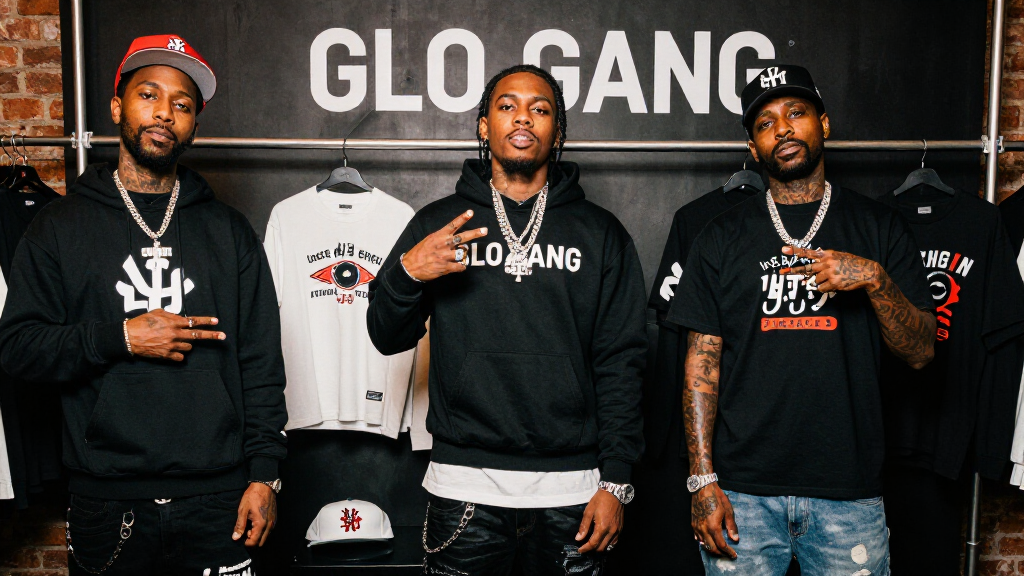
Chief Keef established Glo Gang — originally called Glory Boyz Entertainment — as his label imprint and brand infrastructure. The operation allowed him to release music on his own terms, sign artists he believed in, and capture a share of the revenue from the broader Glo Gang ecosystem rather than simply being a royalty recipient for another label’s asset. Artists affiliated with Glo Gang — including Ballout, Tadoe, and others — recorded under the umbrella, extending the brand’s reach.
The Glo Gang aesthetic — merchandise, logos, social media identity — developed a life of its own, particularly among younger fans who connected with its Chicago roots and anti-mainstream energy. Keef’s merchandise business became a meaningful revenue stream independent of his music sales.
During this period he also relocated, spending extended time in Los Angeles as a result of legal restrictions that complicated his ability to return to Chicago. The move influenced his sound — his music in this period experimented with melodic approaches and production styles that went further from his drill origins, previewing directions that would become mainstream several years later when artists like Lil Uzi Vert and Juice WRLD brought melodic trap to its commercial peak.
2018–2022: Influence Confirmed, Sound Evolves
By the late 2010s, music critics and industry observers who had once dismissed Chief Keef as a novelty act were reassessing his legacy with more seriousness. The artists who had built careers in the mid-to-late 2010s — Lil Uzi Vert, Playboi Carti, Future, Young Thug, Juice WRLD, Travis Scott — had all cited Keef as a formative influence, and the sonic fingerprints were audible. The melodic drift, the emotional flatness deployed for maximum effect, the 808 dependence, the lean aesthetic — these were all things Keef had been doing years before they became commercially dominant.
His prolific output continued. By the early 2020s, Chief Keef had released well over 500 songs across official projects, mixtapes, and loosies — a catalog scale that most artists working for twice as long haven’t approached. This catalog became increasingly valuable as streaming platforms rewarded deep libraries and as younger fans discovered his early work through its connections to artists they already loved.
2022–2026: Independent Empire and Catalog Revenue
Through 2022 and into 2026, Chief Keef has operated almost entirely outside the major-label system, and has publicly described this independence as essential to his identity and his financial model. He has continued releasing music through Glo Gang, toured selectively but profitably — his shows remain events for a fanbase that has grown more devoted over time rather than fading — and has expanded his production activities, occasionally licensing beats and samples to other artists.
His collaboration with Kanye West has remained a recurring thread: the two have worked together on multiple occasions across the years, and each collaboration refreshes Keef’s mainstream visibility without requiring him to compromise his independence. A$AP Rocky and Rick Ross collaborations have similarly kept him connected to the rap mainstream on his own terms.
Chief Keef Net Worth and Income Sources
Chief Keef’s estimated net worth of approximately $12 million in 2026 reflects the compound effect of a decade-long streaming catalog, an independent label operation, and sustained touring activity. All figures below are estimates derived from public industry data and should be understood as approximations — Keef does not publicly disclose his financial details.
| Income Source | Estimated Amount | Type | Notes |
|---|---|---|---|
| Streaming Catalog | $1,500,000–$2,000,000/year | Annual (personal) | 500+ song catalog across Spotify, Apple Music, YouTube; “Love Sosa,” “I Don’t Like,” “Faneto” generate consistent passive income; independent ownership means higher per-stream share than a typical major-label artist |
| Touring & Live Performances | $800,000–$1,200,000/year | Annual (personal) | Selective headline shows and festival appearances; personal share after production, management, and booking costs; loyal fanbase supports strong ticket demand years after peak commercial period |
| Glo Gang Label & Merchandise | $500,000–$1,000,000/year | Annual (personal) | Revenue from artist signings, label operations, and Glo Gang branded merchandise — an independent business stream not tied to his personal music releases |
| Production & Sample Licensing | $300,000–$600,000/year | Annual (personal) | Royalties from samples of his work used by other artists; production credits on collaborations; licensing of his recordings for sync and other commercial uses |
| Estimated Total Net Worth | ~$12 Million (2026, estimated) | ||
A critical factor in Chief Keef’s financial picture is his independence. Artists signed to major labels typically receive royalty rates of 15–25% of streaming revenue after recouping advances. An independent artist distributing through a company like DistroKid or a similar service can retain 80–100% of their streaming income. For an artist with Keef’s catalog volume and streaming footprint, the difference over a decade is substantial — potentially millions of dollars that would otherwise have stayed with a label.
Net Worth Over Time
Chief Keef’s financial trajectory has been unusual in its resilience. The $6 million Interscope deal in 2012 provided a significant early infusion of capital, but the label relationship’s collapse and the legal costs of his early years likely consumed much of that initial advance. By 2015, his net worth was estimated at $3–4 million — rebuilt through independent releases rather than label advances. As his catalog grew and streaming economies matured, the passive income from thousands of monthly streams across hundreds of songs compounded meaningfully. By 2020, estimates placed his net worth around $7–9 million. The continued growth of his catalog’s streaming numbers, Glo Gang’s expansion, and sustained touring through 2022–2026 have pushed the estimate to approximately $12 million.
Personal Life and Legacy
Chief Keef has multiple children and has been involved in various legal matters over the years, including weapons-related charges during his teens and early career. He spent time on house arrest during the very period when he became famous, and later faced periods where legal restrictions limited his travel — including constraints on returning to Chicago that contributed to his extended time in Los Angeles.
His relationship with Chicago has remained complicated. He represents the city’s South Side in his music and his identity, but has been unable to spend significant time there during certain periods due to legal circumstances. Despite this, he is regarded in Chicago — and increasingly in the broader culture — as one of the city’s most consequential musical exports of the last 20 years.
Keef is known within the industry for a work ethic that contradicts his laid-back public image. His output of 500+ songs — many released without formal promotion, simply dropped into the ecosystem — reflects an approach to music-making that treats it as a craft to be practiced daily rather than an event to be orchestrated quarterly. Several artists have described sessions with him in which he recorded multiple complete songs in a single evening.
Awards and Recognition
Chief Keef has not accumulated traditional award show trophies — his relationship with the mainstream industry was always more adversarial than cooperative — but his recognition comes in a more durable form: the testimony of the artists who cite him as essential. Lil Uzi Vert, Playboi Carti, Juice WRLD, Travis Scott, Future, Young Thug, and others have all named him as a primary influence. Rolling Stone and Pitchfork have both published retrospective pieces situating him as one of the most impactful rappers of the 2010s. His “I Don’t Like” Kanye West remix is frequently cited in music journalism as one of the pivotal moments in the transition from old-school trap to the drill-influenced sound that came to dominate streaming in the late 2010s.
Little-Known Facts
- Chief Keef became famous while on house arrest — he wore an ankle monitor during the filming of the “I Don’t Like” video that launched his career, and he was physically unable to leave his grandmother’s property for most of his initial rise.
- Kanye West did not simply remix “I Don’t Like” — he reportedly called Keef personally to discuss the collaboration, then performed the remix publicly at a concert, effectively using his own platform to introduce a teenager from the South Side to a global audience.
- Keef has released well over 500 songs across his career — a volume that puts him among the most prolific artists in modern rap, comparable to artists like Gucci Mane who are specifically noted for their output.
- He was one of the first artists to develop what became the “mumble rap” and melodic trap aesthetics — experimental approaches to rap that critics initially mocked but that became commercially dominant within a few years, as artists like Future, Young Thug, and eventually Post Malone proved their mainstream viability.
- His influence on fashion is rarely discussed relative to his musical impact, but the lean aesthetic and specific streetwear sensibilities associated with Glo Gang were replicated by artists and fans across the country years before those looks became mainstream in fashion media.
https://www.youtube.com/watch?v=lqkMFnhH5Dc
Frequently Asked Questions About Chief Keef
What is Chief Keef’s net worth in 2026?
Chief Keef’s net worth is estimated at approximately $12 million as of 2026. His wealth is built primarily on his streaming catalog — a library of 500+ songs that generates substantial passive income annually — alongside his Glo Gang label and merchandise operation, selective but profitable touring, and production and sample licensing royalties. These are estimates based on public industry data; his exact finances are not publicly disclosed.
What is Chief Keef’s real name?
Chief Keef’s real name is Keith Farrelle Cozart. He was born on August 15, 1995, in Chicago, Illinois, and grew up in the Woodlawn neighborhood on the city’s South Side, where he was largely raised by his grandmother Lolita Baldwin.
How did Chief Keef get famous?
Chief Keef went viral in early 2012 with “I Don’t Like,” a song he filmed in his grandmother’s backyard while under house arrest at age 16. The track spread rapidly on YouTube and social media, attracting the attention of Kanye West, who recorded and publicly released a remix. The Kanye cosign triggered a major-label bidding war that ended with Keef signing with Interscope Records for a reported $6 million deal.
Did Chief Keef invent drill music?
Chief Keef is widely credited as the most visible pioneer of Chicago drill — the sub-genre of trap music characterized by heavy 808s, hollow hi-hats, menacing production, and emotionally flat delivery. While other artists including Lil Durk, G Herbo, and producers like Young Chop were developing alongside him, Keef’s viral breakthrough gave the sound its national and international platform. Drill subsequently evolved into distinct regional variants in New York, London, and other cities, all tracing their lineage back to Chicago’s early 2010s scene.
What happened to Chief Keef’s Interscope deal?
Chief Keef signed with Interscope Records in 2012 for a deal reported at approximately $6 million, releasing his debut album Finally Rich that same year. The relationship deteriorated over the following two years due to a combination of ongoing legal issues, difficulty marketing his unconventional persona through conventional channels, and creative friction. Interscope dropped him by 2014. Keef subsequently moved to fully independent operations through his own Glo Gang label imprint, which he has maintained ever since.
Who has Chief Keef influenced?
Chief Keef’s influence on rap is among the broadest of any artist of his generation. Artists who have explicitly cited him as a primary influence include Lil Uzi Vert, Playboi Carti, Juice WRLD, Travis Scott, Future, Young Thug, Post Malone, and Lil Pump, among many others. His aesthetic — melodic trap, emotional detachment deployed for effect, the lean culture, 808-heavy production — became the dominant sound of commercial rap in the late 2010s, years after Keef was doing versions of it independently.
Is Chief Keef still making music?
Yes. As of 2026, Chief Keef continues to release music through his Glo Gang operation and occasionally collaborates with other artists. He has maintained an extraordinarily prolific output throughout his career and shows no signs of slowing. His touring activity has also continued, with his shows drawing devoted fans who have followed his work across the decade-plus of his career.
Where does Chief Keef live?
Chief Keef spent extended periods in the Los Angeles area during his career, partly due to legal restrictions that complicated his ability to travel freely to Chicago. As of 2026, his exact residence is not publicly confirmed, though he has maintained connections to both Chicago and Los Angeles throughout his career and has spoken about his complicated relationship with his home city.
How much did Chief Keef’s Interscope deal pay?
Chief Keef’s 2012 deal with Interscope Records was reported at the time to be worth approximately $6 million — an extraordinary figure for a 16-year-old unsigned artist. The actual cash received would have been structured across advances tied to album delivery and performance milestones, meaning the total may have differed from the reported figure depending on the deal’s structure and how much was recouped before his departure from the label.