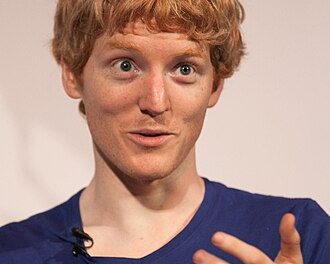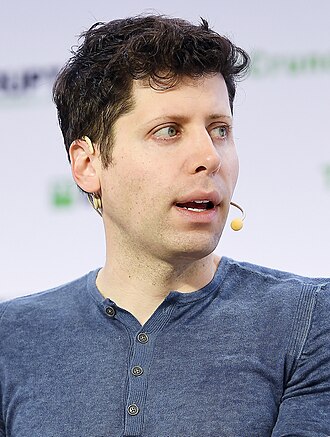
Sam Altman is an American entrepreneur, investor, and technology executive who serves as the CEO of OpenAI, the artificial intelligence research company behind ChatGPT and some of the world’s most consequential AI systems. A former president of Y Combinator — the startup accelerator that launched companies including Airbnb, Dropbox, and Stripe — Altman has spent his career at the intersection of entrepreneurship and emerging technology, and has emerged as one of the most influential figures in the ongoing transformation of global industry by artificial intelligence. As of 2026, Sam Altman’s estimated net worth is $1–2 billion, reflecting his stake in OpenAI and a long career of strategic investments in transformative technology companies.
Walk Through the Article
Quick Answer: Sam Altman Net Worth 2026
| Net Worth | $1–2 billion |
|---|---|
| Full Name | Samuel Harris Altman |
| Born | April 22, 1985 |
| Nationality | American |
| Known For | CEO of OpenAI, ChatGPT, former Y Combinator president |
Early Life and Education
Samuel Harris Altman was born on April 22, 1985, in Chicago, Illinois, and grew up in St. Louis, Missouri, where he developed an early interest in computers and programming. He enrolled at Stanford University to study computer science but left after his freshman year to pursue an entrepreneurial idea — a decision that placed him in the tradition of technology founders who prioritized building over completing formal education.
His departure from Stanford was not an abandonment of learning but a redirection of it — Altman has consistently demonstrated intellectual curiosity across domains including energy, biotechnology, and policy, and his career has reflected an unusually broad engagement with ideas beyond the immediate commercial interests of his ventures. His early experiences navigating Silicon Valley as a young founder shaped his understanding of the startup ecosystem that he would later help define as Y Combinator’s leader.
Loopt and Early Career
Altman’s first significant venture was Loopt, a location-based social networking app that he co-founded while still at Stanford. Loopt was one of the original iPhone app launches in 2008 and attracted significant investor attention as a pioneering mobile social application. Though Loopt never achieved the mass adoption that its early backers hoped for, the company was eventually acquired by Green Dot Corporation in 2012 for approximately $43 million — a modest outcome but one that established Altman as a credible founder and gave him valuable experience navigating the full lifecycle of a venture-backed startup.
The Loopt experience positioned Altman well for his transition into the investor and accelerator world. His firsthand understanding of what founders needed — and what they typically didn’t get from traditional investors — informed his approach to running Y Combinator and shaped his reputation as an unusually empathetic and practically minded startup advisor.
Y Combinator
Altman became president of Y Combinator in 2014, succeeding Paul Graham who had co-founded the organization. Under his leadership, Y Combinator expanded dramatically in scope and ambition — increasing the number of companies it funded per batch, launching YC Research to explore fundamental questions in science and technology, and expanding its geographic reach beyond Silicon Valley. The program’s portfolio during his tenure included companies that became significant enterprises across sectors from healthcare to financial technology to enterprise software.
His years at Y Combinator built Altman’s network across the technology industry and gave him a uniquely comprehensive view of how transformative companies are built — the patterns of success and failure that play out across hundreds of startups. This knowledge base proved invaluable as he navigated the far more complex challenge of leading OpenAI through one of the most consequential periods in the history of technology.
OpenAI and the AI Revolution
Sam Altman became CEO of OpenAI in 2019, taking the helm of an organization that had been founded in 2015 as a nonprofit AI safety research lab with backing from Elon Musk, Peter Thiel, and others. Under his leadership, OpenAI transitioned to a capped-profit structure and secured major investment from Microsoft, which ultimately committed over $13 billion to the company and integrated its technologies across Microsoft’s product ecosystem.
The release of ChatGPT in November 2022 represented a watershed moment in the public understanding of artificial intelligence — a product that demonstrated in visceral, immediate terms what large language models could do and sparked a global conversation about the implications of AI for work, education, creativity, and society. ChatGPT became the fastest-growing consumer application in history, reaching 100 million users in two months, and positioned OpenAI at the center of one of the most significant technological transformations in decades.
Altman’s leadership through the release and aftermath of ChatGPT — including the high-profile drama of his brief November 2023 firing and rapid reinstatement as CEO — kept him at the center of public attention and reinforced his status as the most visible face of the AI industry. His testimony before the U.S. Senate and his participation in global policy discussions about AI regulation have made him a key interlocutor between the technology industry and the governments seeking to understand and manage the implications of AI development.
Net Worth and Investments
Sam Altman’s estimated $1–2 billion net worth comes from his equity in OpenAI, his long track record of angel investments in companies including Stripe, Reddit, Asana, and Airbnb, and his stake in Helion Energy, a nuclear fusion company pursuing clean energy. His investment portfolio reflects a consistent focus on transformative technologies with the potential to reshape industries at scale — a focus that has produced several highly successful exits and an investment track record that would be impressive independently of his operational career.
His compensation from OpenAI has been the subject of public discussion; he notably operated for years without a salary from the organization before a compensation package was eventually established. His financial interests are fundamentally tied to the long-term success of OpenAI’s mission rather than near-term corporate performance metrics.
Personal Life and Philosophy
Sam Altman has been publicly open about his identity as a gay man and has spoken about the importance of representation in technology leadership. He has also been forthcoming about his views on topics including AI risk, the potential for transformative abundance from AI-driven productivity, and the responsibilities of technology leaders to engage with policy questions rather than leaving them exclusively to governments and regulators. His public intellectual presence — through essays, interviews, and policy engagement — has made him one of the technology industry’s most visible and influential voices.
Frequently Asked Questions
What is Sam Altman’s role at OpenAI?
Sam Altman is the CEO of OpenAI, the AI research company behind ChatGPT and GPT-4. He has led the company through its most transformative period, including the launch of ChatGPT and OpenAI’s partnership with Microsoft.
Did Sam Altman found OpenAI?
Sam Altman did not found OpenAI but became its CEO in 2019. OpenAI was founded in 2015 by a group that included Elon Musk and Greg Brockman, with Altman among its early backers and advisors.
What companies has Sam Altman invested in?
Sam Altman has made investments in numerous successful technology companies including Stripe, Airbnb, Reddit, and Asana, as well as energy ventures including Helion Energy and Oklo. His portfolio reflects a long-term focus on transformative technologies.
Also Read:
OpenAI Leadership & the ChatGPT Revolution
Sam Altman’s tenure as OpenAI CEO has coincided with the most dramatic transformation in artificial intelligence history. When ChatGPT launched in November 2022, Altman led a product that reached 100 million users faster than any application in history, fundamentally changing public understanding of AI capabilities. His leadership through this transition required balancing rapid capability development with safety research, investor expectations with ethical obligations, and competitive pressure with responsible deployment. Altman’s communication style—simultaneously enthusiastic about AI’s transformative potential and soberly cautious about existential risks—positioned him as the public face of AI development. His congressional testimony and international diplomatic engagements demonstrated his recognition that AI governance required engagement beyond Silicon Valley. The November 2023 boardroom crisis, during which Altman was briefly removed before being reinstated as CEO, highlighted the governance tensions inherent in building transformative technology as a nonprofit-adjacent organization.
Vision for AGI & Future of Humanity
Sam Altman’s public statements reveal a worldview that takes artificial general intelligence seriously as a near-term possibility with profound implications for human civilization. His writings and interviews address questions about power concentration, economic disruption, and the need for new social contracts as AI reshapes labor markets. Altman’s advocacy for universal basic income reflects his assessment that AI productivity gains will require significant redistribution of economic benefits. He has been transparent about the tensions between OpenAI’s safety-focused mission and commercial realities, acknowledging that building transformative AI requires substantial resources that can only be obtained through commercialization. Altman’s global engagement includes conversations with world leaders about AI governance frameworks, reflecting his understanding that effective AI policy requires international coordination. His partnership with Microsoft and OpenAI’s relationships with major enterprises demonstrate his ability to build commercial ecosystems that fund continued research and development.