
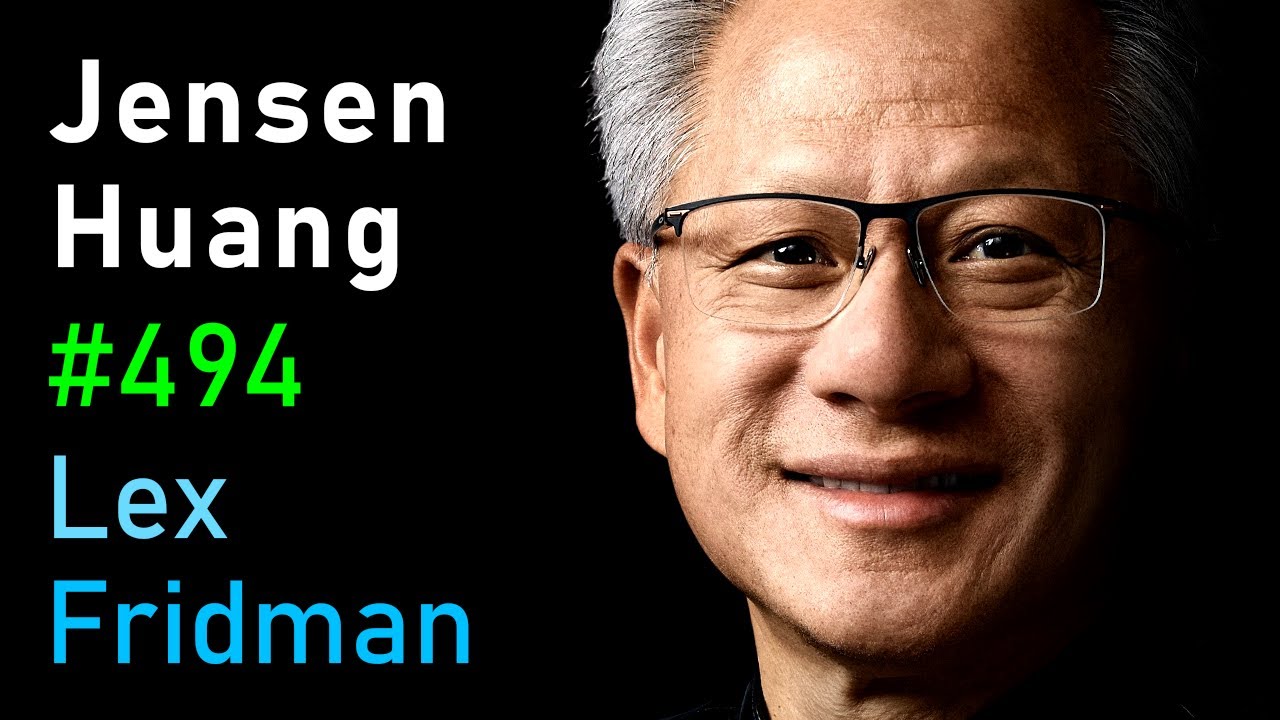
Jensen Huang is a Taiwanese-American entrepreneur and technology executive who co-founded NVIDIA Corporation in 1993 and has served as its CEO ever since, steering the company from a graphics chip maker into the dominant force in artificial intelligence infrastructure and one of the most valuable companies in the world. His visionary bet on parallel computing architectures and GPU-accelerated computing proved to be one of the most consequential technological decisions of the modern era, positioning NVIDIA at the center of the AI revolution decades before most of his peers recognized the opportunity. As of 2026, Jensen Huang’s estimated net worth is $100–120 billion, reflecting NVIDIA’s extraordinary market valuation and his substantial equity stake in the company he built.
Walk Through the Article
Quick Answer: Jensen Huang Net Worth 2026
| Net Worth | $100–120 billion |
|---|---|
| Full Name | Jen-Hsun Huang |
| Born | February 17, 1963 |
| Nationality | American (born Taiwan) |
| Known For | Co-founder and CEO of NVIDIA, GPU computing, AI infrastructure |
Early Life and Education
Jen-Hsun Huang was born on February 17, 1963, in Tainan, Taiwan. At age nine, his family sent him and his brother to the United States to live with relatives in Kentucky, where he attended a boarding school that, as he has described in interviews, was rougher than his family had anticipated. He went on to study electrical engineering at Oregon State University, where he met his future wife Lori Mills, and then earned a master’s degree in electrical engineering from Stanford University — a trajectory that gave him both the technical foundation and the professional connections that would prove crucial in building NVIDIA.
His early career included positions at AMD and LSI Logic, semiconductor companies where he developed the engineering and business experience that prepared him for entrepreneurship. The decision to found NVIDIA emerged from his conviction that graphics processing represented a massive untapped opportunity — a belief that proved correct in ways he could not have fully anticipated when he and co-founders Chris Malachowsky and Curtis Priem started the company in 1993.
Founding and Building NVIDIA
NVIDIA was founded in April 1993 with a focus on graphics processing for the gaming market, which Huang recognized as a domain that would require massive increases in computing power to meet player expectations. The company’s early products, including the RIVA 128 in 1997 and the landmark GeForce 256 in 1999 — which NVIDIA marketed as the world’s first GPU — established it as the leading innovator in consumer graphics hardware. NVIDIA went public in 1999, providing capital for continued product development and expansion.
The pivotal strategic decision of Huang’s career came with the development of CUDA, NVIDIA’s parallel computing platform and programming model, launched in 2006. CUDA made it possible for researchers and developers to use NVIDIA’s graphics cards for general-purpose computing tasks far beyond gaming — opening the door to scientific simulation, data analytics, and eventually deep learning. This architectural decision, made years before AI became the dominant topic in technology, proved to be one of the most prescient in the history of the industry.
The AI Revolution and NVIDIA’s Dominance
The explosion of deep learning research in the early 2010s — driven by researchers including Geoffrey Hinton and his students who demonstrated that neural networks trained on GPUs could dramatically outperform prior approaches to image recognition — validated Huang’s CUDA strategy in the most dramatic possible way. NVIDIA’s GPUs became the essential hardware substrate for AI research and development, with the company’s H100 and A100 chips eventually becoming as strategically important as any resource in the global AI industry.
The demand for NVIDIA hardware from technology companies, cloud providers, and governments pursuing AI capabilities drove NVIDIA’s market capitalization from approximately $300 billion at the start of 2023 to over $3 trillion by mid-2024 — one of the most dramatic increases in corporate value in the history of financial markets. Huang’s consistent ownership stake in the company he founded meant that this appreciation translated directly into personal wealth of a scale placing him among the richest people in the world.
His distinctive personal style — including his trademark black leather jacket worn at nearly every public appearance — has made him one of the most recognizable figures in technology, and his theatrical product announcements at major industry events have earned him a following that goes beyond the traditional technology audience.
Net Worth and NVIDIA Equity
Jensen Huang’s estimated $100–120 billion net worth is almost entirely derived from his ownership stake in NVIDIA, which he has held since the company’s founding. As NVIDIA’s market capitalization has grown to become one of the largest in the world, the value of this stake has increased proportionally, transforming him from a successful entrepreneur into one of the wealthiest individuals in human history. He also receives executive compensation from NVIDIA including salary and stock grants that contribute to his overall financial position.
Philanthropy and Legacy
Jensen Huang and his wife Lori have made significant philanthropic commitments to educational institutions. They donated $30 million to Oregon State University in 2022, supporting the construction of the Jen-Hsun and Lori Huang Collaborative Innovation Complex. They have also made substantial gifts to Stanford University’s School of Engineering, reflecting their commitment to the kind of technical education that shaped Huang’s own career.
Huang’s broader legacy is inseparable from the transformation of computing that NVIDIA enabled. By making the GPU the essential tool of the AI age, he shaped the infrastructure on which the artificial intelligence revolution is being built — a contribution to technology and society whose full implications will take decades to fully appreciate.
Frequently Asked Questions
Did Jensen Huang found NVIDIA?
Yes, Jensen Huang co-founded NVIDIA in 1993 along with Chris Malachowsky and Curtis Priem. He has served as the company’s CEO since its founding — an unusually long tenure that has given him deep institutional knowledge and consistent strategic direction.
Why is NVIDIA so valuable?
NVIDIA’s extraordinary valuation reflects its dominant position in GPU hardware for artificial intelligence — its H100 and A100 chips are the preferred computing platform for training large AI models. This dominance traces back to NVIDIA’s development of the CUDA programming platform in 2006, which made its GPUs the essential tool for AI research years before the current boom.
Where is Jensen Huang from originally?
Jensen Huang was born in Tainan, Taiwan, and moved to the United States at age nine. He grew up in the US, attended Oregon State University and Stanford, and has lived in the San Francisco Bay Area throughout his career.
Also Read:
NVIDIA’s Rise & the AI Hardware Revolution
Jensen Huang’s vision for NVIDIA transcended the company’s gaming origins to anticipate the computational demands of artificial intelligence decades before AI became mainstream. When Huang co-founded NVIDIA in 1993, he recognized that visual computing would require unprecedented parallel processing capabilities. This insight led to GPU development that would ultimately prove essential for training large-scale machine learning models. NVIDIA’s CUDA programming platform, launched in 2006, was a strategic masterstroke—enabling researchers and developers to harness GPU power for general computing, creating a software ecosystem that locked in NVIDIA’s competitive advantage. As deep learning emerged in the 2010s, Huang’s company found itself holding the essential hardware infrastructure. His decision to invest heavily in AI-specific chip architecture, exemplified by the A100 and H100 data center GPUs, positioned NVIDIA perfectly for the generative AI explosion of 2022-2024. Huang’s technical leadership and long-term strategic thinking transformed NVIDIA from a gaming peripheral maker into the backbone of artificial intelligence infrastructure.
Global Impact & Business Philosophy
Jensen Huang’s leadership philosophy combines relentless innovation with a distinctive management style characterized by high standards, intellectual rigor, and direct communication. His famous leather jacket—worn at every major product announcement—has become iconic in the tech world, symbolizing his consistent personal brand and approachability despite overseeing a trillion-dollar company. Huang’s emphasis on NVIDIA’s company culture centers on what he calls ‘intellectual honesty’—the willingness to confront difficult truths and make decisions based on reality rather than wishful thinking. He has built NVIDIA into a platform company, ensuring that customers across gaming, professional visualization, data centers, and autonomous vehicles all depend on NVIDIA’s ecosystem. His business acumen includes maintaining pricing power through proprietary software ecosystems and building switching costs that make migrating away from NVIDIA infrastructure prohibitively expensive. Huang’s philanthropic efforts, particularly in education and research, reflect his belief that NVIDIA’s success carries broader social responsibilities.